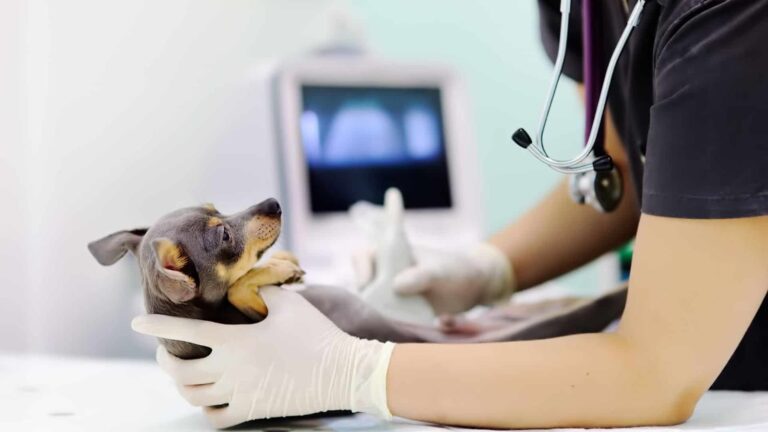
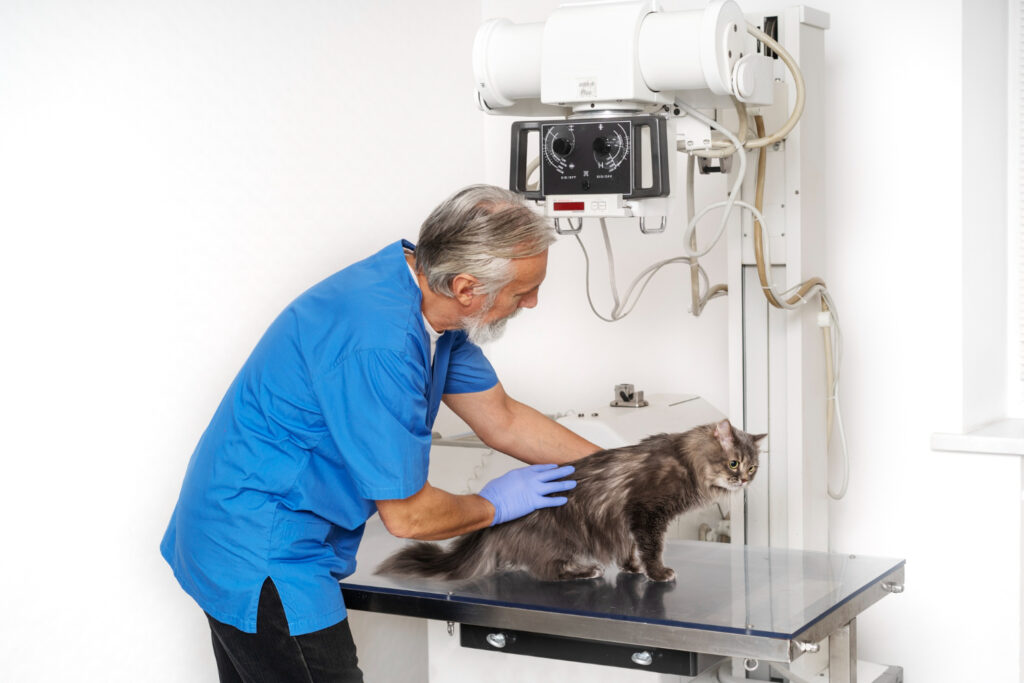
Senior pets are remarkably good at hiding problems. A dog who still meets you at the door every evening can carry arthritis, organ changes, or a growing mass for months before anything obvious shows up. Diagnostic imaging, including X-rays, ultrasounds, and MRIs, allows veterinarians to see what is happening inside your senior pet’s body, which helps catch potential problems earlier than symptoms alone would allow.
For pet owners in Wareham, Massachusetts and the surrounding towns, the practical question is not whether imaging exists. It is when it makes sense, what each type of scan can actually show, and what the process involves for an older dog or cat. The sections below walk through those decisions in plain terms.
Why Aging Pets Need a Different Approach
Our pets are part of the family, and as they grow older, we want them to age comfortably and healthily. Just like humans, senior pets face age-related health issues that often go unnoticed until they become serious. That is exactly where imaging helps.
Senior pets often benefit from regular imaging to monitor age-related conditions, and advanced diagnostic imaging is a cornerstone of modern veterinary care. A physical exam and bloodwork still come first, and they answer a lot of questions. What they cannot do is show the shape of an organ, the condition of a joint, or a mass sitting quietly in the abdomen. Imaging fills that gap.
Situations Where Advanced Imaging Helps Most
Veterinarians do not reach for every scan on every senior patient. Imaging gets recommended when the answer to a specific question would change how your pet is treated. These are the situations that come up most often.
Neurological Emergencies
Sudden seizures, disorientation, or weakness in the legs are frightening to watch, both for the animal and the person caring for them. Advanced imaging such as MRI and CT scans helps veterinarians find and treat neurological emergencies, because the underlying cause could sit in the brain or spinal cord where an exam cannot reach. Without imaging, a veterinarian can describe the symptoms but may not be able to identify what is driving them.
Bone, Joint, and Mobility Problems
Older pets slow down, and it is tempting to write that off as normal aging. Imaging is a great option to assess for fractured bones or arthritis in older pets, and it separates the two. A pet with arthritis may benefit from pain management and lifestyle changes, while a fracture needs an entirely different plan. Knowing which one you are dealing with prevents months of guessing.
Monitoring Long-Term Age-Related Conditions
Once a senior pet is diagnosed with a condition that needs watching, repeat imaging can track whether it is stable, improving, or progressing. This is one of the clearest uses of advanced imaging for senior pets. Trends over time tell a veterinarian far more than a single snapshot, and catching a change early often opens up more treatment options than catching it late.
Symptoms That Do Not Match the Exam Findings
Sometimes a pet is clearly unwell but the physical exam and routine lab work do not explain why. Advanced imaging plays a critical role in veterinary medicine because it allows for early, accurate diagnosis of complex conditions that might otherwise go undetected. When the story does not add up, imaging is frequently the step that resolves it.
What Counts as Advanced Imaging?
Advanced imaging is a blanket term for different types of scans that give your veterinarian a way to look inside your pet’s body without surgery. The most common forms are CT scans, MRI scans, and ultrasounds, and X-rays fall into the broader diagnostic imaging family as well. Each one is good at different things.
| Imaging type | What it is generally used for |
|---|---|
| X-ray | Assessing fractured bones or arthritis in older pets, and other structural concerns |
| Ultrasound | Looking inside the body without surgery; abdominal and thoracic studies and echocardiography for the heart |
| CT scan | Detailed cross-sectional views; brain imaging in older, large breed dogs such as golden retrievers and boxers |
| MRI | Identifying many brain lesions and investigating neurological problems such as seizures |
Matching the Scan to the Question
The choice of modality is not arbitrary. CT imaging of the brain should be reserved for older, large breed dogs, such as golden retriever and boxer dogs, while MRI can identify many brain lesions that other studies may miss. For a pet with a suspected abdominal problem, an ultrasound may answer the question directly without anesthesia. For a pet with a suspected brain lesion, MRI is often the more informative study.
This is why the conversation starts with your veterinarian’s clinical suspicion rather than with a scan order. The right question produces a useful answer. The wrong scan produces a picture that does not change anything.
How Sedation and Anesthesia Fit In
For advanced imaging such as MRI or CT scans, sedation or anesthesia is typically required so your dog can remain still. Movement blurs the images and can make a study unreadable, which wastes the procedure and the day. Anesthesia protocols are adjusted for the patient, and age alone does not automatically rule out a scan.
Some studies, including many ultrasounds, may be performed with the pet awake or lightly restrained, depending on the animal and the area being examined. Your veterinary team will explain what is being recommended for your pet specifically, along with what monitoring is in place during the procedure.
Choosing a Veterinary Team With Diagnostic Depth
Where imaging is performed matters as much as which scan is chosen. Wareham Animal Hospital provides full-service veterinary care to pets in Wareham and nearby southeastern Massachusetts communities, and its diagnostic capabilities include echocardiography along with abdominal and thoracic ultrasound. The practice also offers surgical services, emergency care, and personalized treatment plans.
That combination is useful for senior pets because imaging questions rarely arrive alone. An older dog with a heart murmur may need an echocardiogram before anesthesia for an unrelated procedure. A cat with an abdominal mass may need surgical planning based on what the ultrasound shows. Having diagnostics, surgery, and emergency care under one roof reduces the number of separate trips an aging pet has to make, which matters when every car ride is stressful.
Questions Worth Asking Before You Schedule
- What specific question is this scan meant to answer?
- How will the results change my pet’s treatment plan?
- Will sedation or anesthesia be needed, and how will that be managed for a senior pet?
- Are there less invasive steps we should try first?
- What should I watch for at home in the meantime?
- What are the alternatives if I decide to wait?
None of these questions are unreasonable, and a good veterinary team will welcome them. If the answers are vague, ask again. You are entitled to understand why a recommendation is being made before you agree to it.
Making the Decision Without Regret
There is no single age at which imaging becomes mandatory and no single symptom that always requires it. The honest answer is that advanced imaging for senior pets is worth considering when the information would change what happens next, when symptoms persist without explanation, or when a known condition needs tracking over time.
Waiting is sometimes the right call. So is scanning early enough that treatment is still straightforward. A conversation with your veterinarian about your pet’s specific situation, and about what you hope to learn, is the most reliable way to land on the right side of that decision.
Frequently Asked Questions
Is advanced imaging safe for older pets?
Imaging itself is non-invasive, which is why it is used to look inside the body without surgery. The main consideration for senior patients is sedation or anesthesia, which is typically required for MRI and CT scans so the pet stays still. Your veterinarian will weigh your pet’s overall health before recommending a protocol.
Does my senior dog need sedation for an MRI or CT scan?
Yes, in most cases. For advanced imaging such as MRI or CT scans, sedation or anesthesia is typically required so your dog can remain still during the study. Movement blurs the images and can make them unreadable. Some other studies, including many ultrasounds, may not require the same level of sedation.
How often should a senior pet have imaging done?
There is no universal schedule. Senior pets often benefit from regular imaging to monitor age-related conditions, but how often depends on what is being watched, how stable it has been, and your veterinarian’s judgment. Some pets are imaged once to answer a question, while others are rechecked periodically over months or years.
What is the difference between an X-ray and an ultrasound?
Both let a veterinarian see inside your pet without surgery, but they show different things. X-rays are a great option to assess for fractured bones or arthritis in older pets. Ultrasound is used for soft tissue studies, including abdominal and thoracic imaging and echocardiography of the heart. Your veterinarian will choose based on the suspected problem.